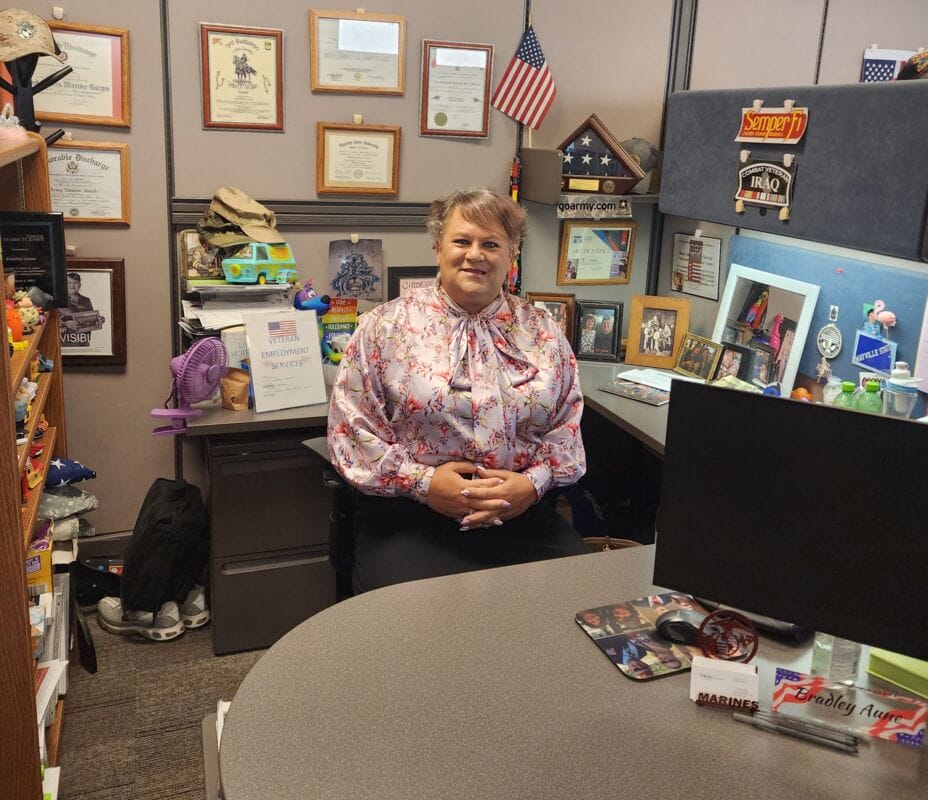
Veterans Employment Representative, State of North Dakota
Branches Served:
- Marines
- Army National Guard
Veterans bring unique qualities to the workforce thanks to their diverse experiences and disciplined nature.
Bradley, a former Marine and Army National Guard member, has dedicated her career to advocating for veterans and helping them transition back into civilian life and she currently works as a Veterans Employment Representative for the State of North Dakota. In her presentations to HR associations, she highlights the tremendous value veterans offer, even if they face challenges such as physical disabilities or mental health issues. With reasonable accommodations, these veterans can become incredibly valuable team members who enrich workplaces with their commitment , reliability, and diverse skill sets.
Overcoming Barriers to Employment
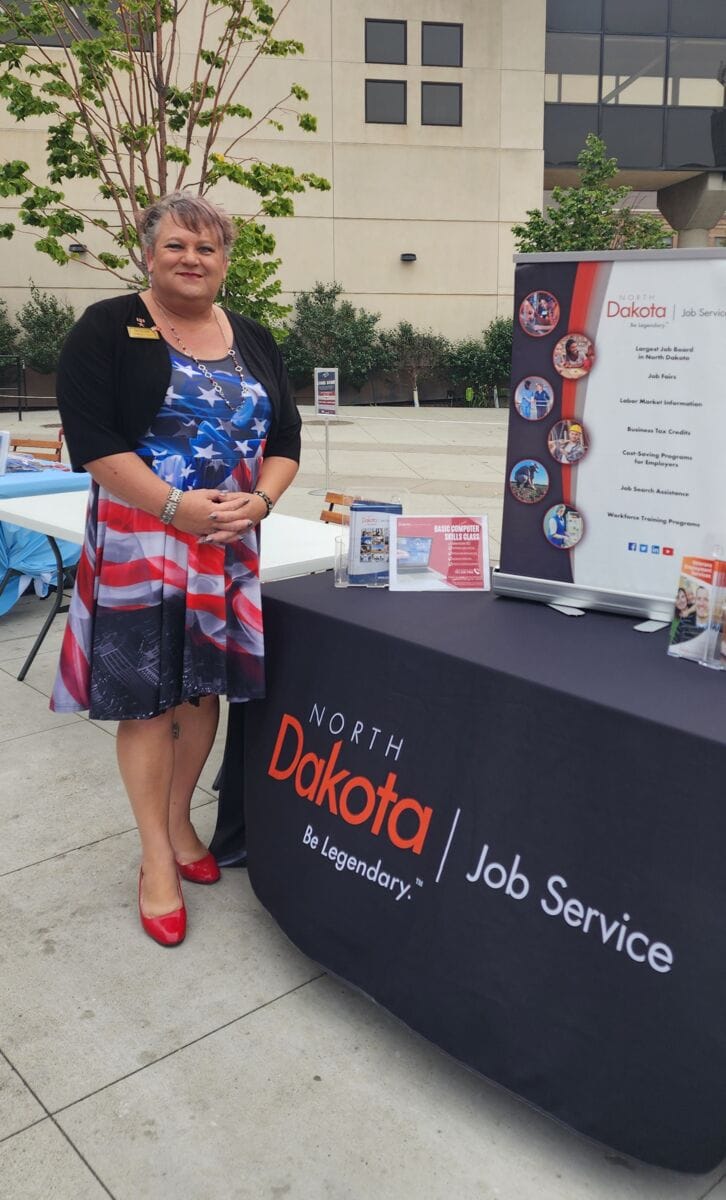
Bradley’s work centers around assisting veterans who face barriers to employment, which could include physical or mental health challenges, justice involvement, homelessness, and more. Her role is not only to help these veterans find employment but also to connect them with necessary community services and guide them through the process of reintegrating into society as contributing members. She has spent over 16 years working with veterans, many of whom successfully transitioned into civilian careers through education programs such as the GI Bill, university systems, and trade schools.
The Journey to Becoming A Marine
Bradley always knew she wanted to be a Marine. As a kid, she played army with her neighbors, but it was the Marines that captivated her. With her intense personality and desire for a challenge, she was determined to make the most of her military career. She chose the Marine Infantry because she wanted to experience the world and not be stationed back in North Dakota. Her time in the Marines was filled with intense experiences—completing Marine School, the climber’s course, jungle survival training, and helicopter boat operations. She even guarded nuclear weapons on an aircraft carrier and survived being shot at. The contrast between these life-altering experiences and returning to a political science class back home in North Dakota challenged Bradley.
“Being a 23-year-old freshman in college and surrounded by 18-yearolds was an adjustment,” Bradley said. “I had already been through combat deployments around the world, and then I was in school listening to these kids complain about things that seemed minor to me. It made me feel like an old man at 23. Culturally, it was tough trying to connect with my peers while processing all the life experiences I’d already had. It was definitely something I had to work through.”
The Balance Between Civilian Life and The National Guard
After earning her degree in psychology, Bradley worked as a juvenile probation officer for 15 years while serving part-time in the Army National Guard. This came with challenges. Guard duties often required her to miss weekends with family, and work would pile up when she returned. Even though her employer was supportive, Bradley witnessed other veterans facing employment challenges due to their service commitments. Her own two-year deployment to Iraq further complicated her career. While her job was held for her, the atmosphere was uncomfortable when she returned, and the transition back to civilian life became increasingly difficult. This experience ultimately led her to seek a new role working with veterans.

A New Mission: Supporting Veterans
Now working at the North Dakota Job Service, Bradley focuses on helping veterans navigate the benefits and services available to them. She recommends starting with the VA for physical or mental health support, and believes strongly in utilizing County Veteran Service Officers, who are experts in guiding veterans through the benefits they may not even be aware they have. Bradley draws from her own experiences as she has used many of these community and federal resources to take care of herself, both physically and mentally.
Veterans in the Workforce: The Importance of Mentorship and Experience
Bradley’s transition from military to civilian life was made smoother by the mentors who guided her. After four years of active duty, she used her GI Bill to get her degree, while continuing to serve in the Army Guard. Mentorship played a key role in her success, and now she seeks to pay it forward by mentoring other veterans. She understands how jarring it can be to go from active duty to a college classroom, but she believes having someone who understands your experience can make all the difference.
Supporting Homeless Veterans and Mental Health Initiatives
Homelessness among veterans is often a result of complex issues, including addiction or mental health challenges. Bradley has seen how many veterans face difficulties during their transition and works with various agencies to provide them with the support they need. Whether it’s finding housing, securing employment, or connecting them with community services, Bradley believes in helping veterans find stability in their lives. She recognizes that housing and work are essential to keeping veterans from falling back into the legal system.
PTSD is a common issue among veterans, and it often intersects with physical conditions resulting from military service. Bradley has personally experienced PTSD and undergone treatment, which gives her a unique perspective when advising veterans on career paths that suit their physical and mental needs.
“Veterans come from all different backgrounds—some deploy to combat, some don’t—but PTSD is definitely something many face,” Bradley said. “Often, there are also physical conditions related to their service, depending on their job in the military. For example, infantry or aircraft mechanics can have hearing impairments because of their work environment, even with hearing protection. These are things we need to coach veterans on, ensuring they get reasonable accommodations in the workplace or in school. I always tell them to find something that suits them physically and mentally. For example, a veteran with PTSD probably wouldn’t do well in a call center where they’re trapped and dealing with angry customers. I know, because I went through PTSD treatment myself 12 years ago after combat. I also have a bad neck, so I use special headphones—just a small accommodation that’s easy for employers to provide, or sometimes the VA can even help with that.”
For help with employment: jobsnd.com/job-seeker/veterans