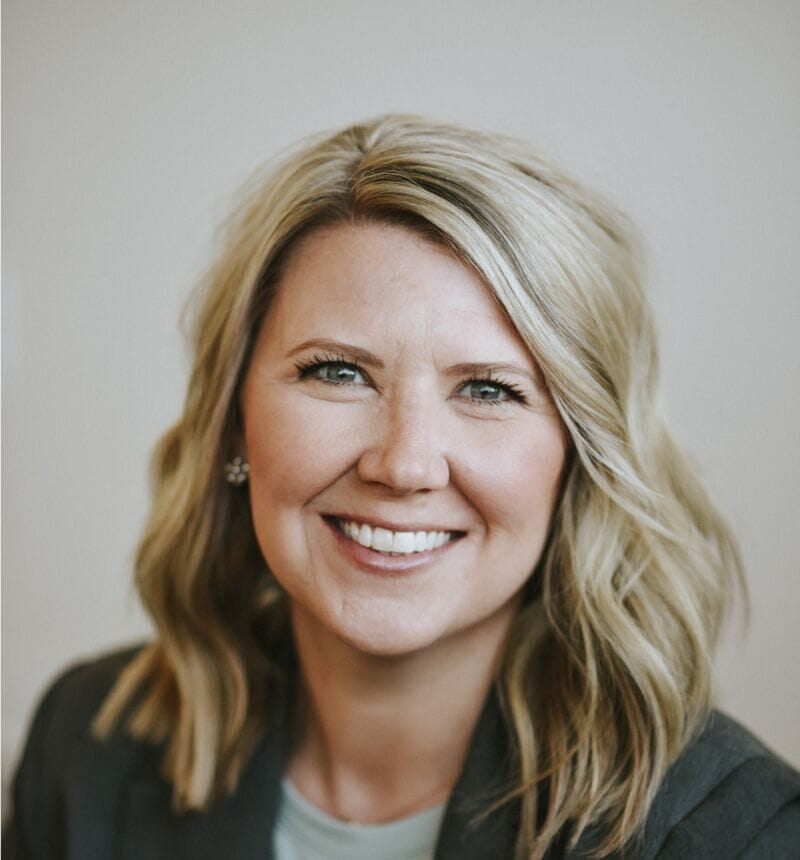
Erin Oban grew up in a small farming community in northwestern North Dakota. Although her family wasn’t politically active, they were deeply involved in the community, always helping and volunteering. For Erin, this sense of service wasn’t about politics, it was simply about giving back and helping people. After graduating from a high school class of 27 students, she pursued a degree and became a middle school math teacher.
Following several years of teaching, Erin began to feel burnt out. “I realized I feel the need to give all of myself in whatever I am doing. If I’m not giving the best of myself, I’m doing a disservice to others,” she said. Taking a step back from teaching, Erin gained experience managing a nonprofit advocating for social change. She later worked with a regional education association that helped rural schools secure much-needed services.
Beyond the Senate: Erin Oban’s Inspiring Journey in Community and Government
“That is when I started to get into government and politics,” Erin said. In 2014, she was recruited to run for the North Dakota State Senate in District 35. “I would never have seen myself running for office. I was happy working for people, working behind the scenes, trying to get things done. I just never saw that for myself at all,” she said. But some of her legislative connections saw her potential and encouraged her to run against the incumbent. After turning down the idea several times, Erin ultimately decided to give it a try, recognizing that she and others in her community weren’t feeling well represented.
“I think once I could accept the likelihood of losing, that’s when I decided maybe I should try,” she said. But Erin didn’t have to settle for that outcome; she was elected in 2014 and then re-elected in 2018. While she enjoyed serving in the Senate, she felt something was missing and chose not to seek re-election.
“Again, I felt like I was no longer giving my best self, and I wanted to make sure that my district was represented by somebody who could,” Erin said.
Then she got a call from the White House.
“I knew previous state directors in this role, but it was not even a consideration for me because I intended to fulfill my legislative term,” she said. “When I had decided not to run again, though, the opportunity to continue in public service in a less political role was very intriguing to me.”
She was offered and accepted the role. Since March 2022, Erin has served as the state director of USDA Rural Development. While her role is different from her time in the Senate, there are some shared goals. “I want to deliver good government. Whether that was me being a representative on behalf of people in the Senate, or serving with this team at Rural Development, I want to deliver the kind of government that I believe everybody should expect,” she said.


One of Erin’s priorities is making government accessible to people from all backgrounds. She believes that better conversations happen when diverse perspectives are included. During her time in the Senate, she was often praised for her ability to explain complex issues in terms everyone could understand. Erin has a unique talent for translating technical language into digestible bits of information. “If you bring in a different perspective, conversations change,” she said.
Erin’s advice to others is to be authentic and let go of the idea that everyone must be pleased. “Way too often, women, especially, assume that they are not smart enough. To that I say, bullshit. You are smart enough and then some. And as long as you’re willing to learn, don’t let that hold you back from getting involved however you want—whether in elected office, volunteer roles, or nonprofit boards for causes you care about. Somebody’s going to do it. So, why shouldn’t it be you?”
Despite her busy career, Erin always makes time for family and friends. She enjoys good food and travel—and is kept on her toes by her second grader, who keeps her and her husband busy with all sorts of fun activities.